  • INT
  • DE
  • FR
  • IT
  • NL

User account menu

  • Log in
Home
  • Magazine
    • All issues
    • Glossary
  • Blog
    • All blog posts
  • Book Reviews
    • Book Reviews
  • Submit to In-Mind
    • Articles
    • Blog posts
  • About In-Mind
    • Team
    • What is In-Mind?
    • Credits

Psychology for You!

  • Magazine Issue
    08/2026 - SpeciaI issue on artificial intelligence

    Why putting humans in the loop can make decision-making with AI worse

    • written by
    • Tobias Rieger,
    • Dietrich Manzey,
    • Eileen Roesler,
    • Linda Onnasch
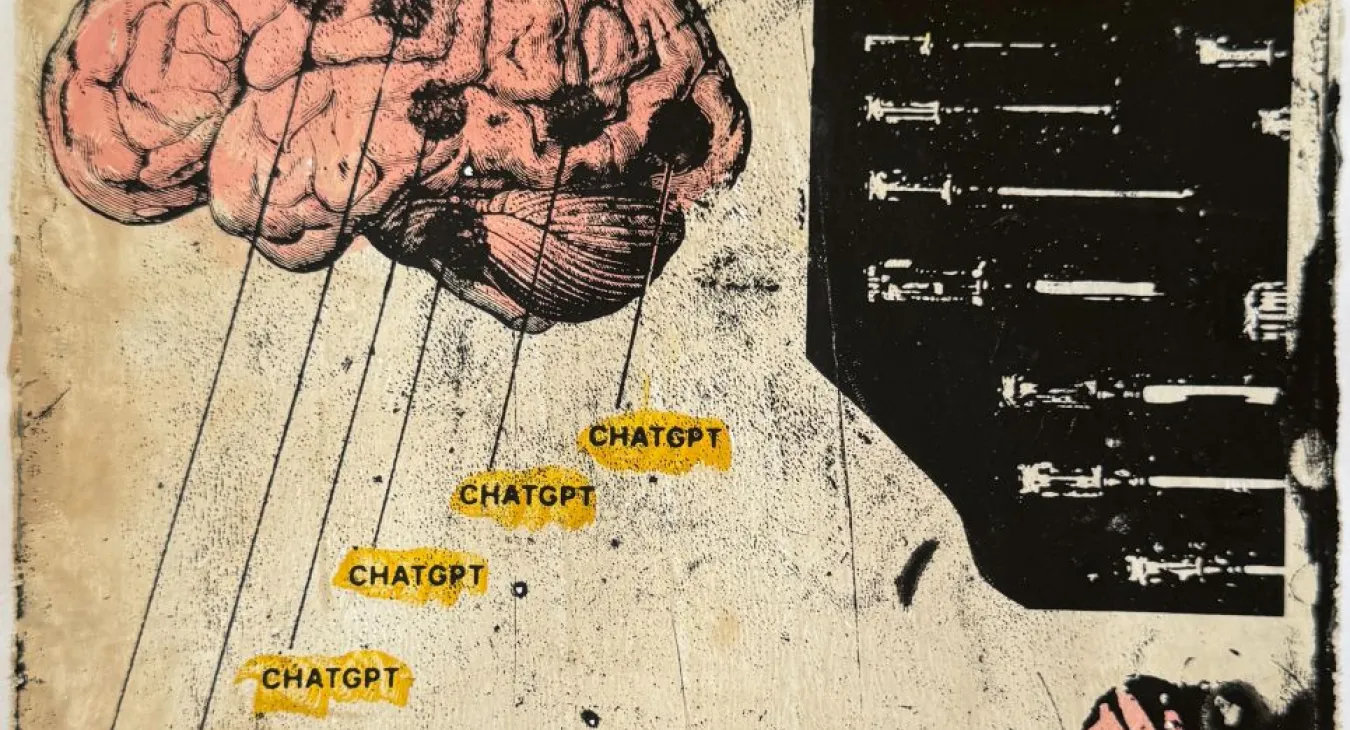
    AI's decisions are often comprised with a human in the loop. Why? The person tries to improve the decisions but ends up making it worse despite good intentions. Our need to contribute interferes with these systems. In this article, we discuss this issue and whether explainable AI can foster true human-AI teamwork for better choices.
    Read more
    • Log in to post comments
  • a brain with areas marked as responsible for chatGPT processing
    Magazine Issue
    08/2026 - SpeciaI issue on artificial intelligence

    Editorial for the special issue "Artificial intelligence, real consequences: Exploring the psychological dimensions of AI"

    • written by
    • Magdalena Wischnewski,
    • Stella Wernicke
    Not long ago, artificial intelligence was mostly found in science fiction and computer science departments. Today, it drafts our emails, recommends our next purchase, tutors our children, and occasionally tells us it understands how we feel. This shift has happened so quickly that our psychological vocabulary is still catching up. What does it mean to trust a system that has no body, no history, and no stake in the outcome but communicates like us? Why do we sometimes treat a chatbot with the same politeness we'd extend to a colleague, and other times discard it the moment it makes a...
    Read more
    • Log in to post comments
  • AI in healthcare
    Magazine Issue
    08/2026 - SpeciaI issue on artificial intelligence

    Doctor, meet AI: How AI systems influence human decision-making in healthcare

    • written by
    • Julia Cecil,
    • Selina Angerer,
    • Eesha Kokje,
    • Susanne Gaube,
    • Anne-Kathrin Kleine,
    • Eva Lermer
    Artificial Intelligence (AI) is revolutionizing healthcare, from enhancing radiology diagnoses to supporting mental health treatment. But while it promises efficiency and accuracy, its integration raises questions of trust, bias, and decision-making dynamics. Will AI become an indispensable medical partner, or will barriers hinder its adoption? This article explores AI’s expanding role, its impact on healthcare professionals, and the road ahead.
    Read more
    • Log in to post comments
  • Man using ChatGPT
    Magazine Issue
    08/2026 - SpeciaI issue on artificial intelligence

    Benefits and risks of asking AI for health advice

    • written by
    • Jaroslava Kaňková
    Can ChatGPT become your new health advisor – or even your therapist? Generative AI tools are changing how we access health information, offering speed and convenience like never before. But alongside the benefits come real risks. This article explores the promise and pitfalls of AI in non-clinical health settings.
    Read more
    • Log in to post comments

  • Magazine Issue 08/2026 - SpeciaI issue on artificial intelligence

    Why putting humans in the loop can make decision-making with AI worse

    written by: Tobias Rieger, Dietrich Manzey, Eileen Roesler, Linda Onnasch
  • Magazine Issue 08/2026 - SpeciaI issue on artificial intelligence

    Editorial for the special issue "Artificial intelligence, real consequences: Exploring the psychological dimensions of AI"

    written by: Magdalena Wischnewski, Stella Wernicke
  • Magazine Issue 08/2026 - SpeciaI issue on artificial intelligence

    Doctor, meet AI: How AI systems influence human decision-making in healthcare

    written by: Julia Cecil, Selina Angerer, Eesha Kokje, Susanne Gaube, Anne-Kathrin Kleine, Eva Lermer
  • Magazine Issue 08/2026 - SpeciaI issue on artificial intelligence

    Benefits and risks of asking AI for health advice

    written by: Jaroslava Kaňková
  • Magazine Issue 12/2019

    What are the positive and negative side effects of gender quotas?

    written by: Angela Dorrough, Christa Nater, Monika Leszczyńska
    To decrease inequality between men and women in the workplace, multiple European countries have introduced legislated quota regulations in favor of women. Since 2016, a gender quota has been entrenched... more
  • Magazine Issue 12/2019

    Sex differences in the perception of sexual arousal

    written by: Andreas Baranowski, Rudolf Stark
    “Men are from mars, women are from Venus” [1] this saying often appears as common knowledge. Particularly the sexuality of men and women is often considered to be fundamentally different... more
  • Magazine Issue 10/2019

    Fair enough? The inequality paradox, inequality awareness, and system justification

    written by: Carmen Cervone, Andrea Scatolon
    Picture society. Some people are rich, some are poor and that’s just the way it is. After all, rich people have worked hard to get where they are, and anyone... more
  • Magazine Issue 10/2019

    Going the extra mile at work: Helpful or harmful?

    written by: Marc Cubrich
    Is it helpful or harmful to go the extra mile at work? While generally regarded favorably, organizational researchers are increasingly considering the potential dark side of discretionary work behaviors that... more
  • Magazine Issue 04/2019

    Can vacations live up to their reputation?

    written by: Ina-Maria Döring
    Especially in the time before summer, people look forward to the beginning of their summer vacations. On the one hand, holidays are an integral part of life of our society... more
  • Magazine Issue 01/2019

    Sorry, Not Sorry: Apologies and Denials in the #MeToo Movement

    written by: Chris Reinders Folmer
    The #MeToo-movement publicly confronts alleged perpetrators of sexual misconduct with their transgressions. In return, the accused often struggle with the question of how to reply. What can research about trust... more
  • Load More Issues

In-Mind Blog

  • 20.06.2014 | Romance & Friendship

    Now I ain’t sayin she’s a gold digger, but will she get with someone who makes less than her, either?

    written by: Cathleen Clerkin
    In this post I review research showing that women do not care about partner’s income as much as people may think. In fact, the research suggests that both men and women overestimate the degree to which the other gender cares about money in relationships. These findings are particularly relevant given that some opponents of the 2014 U.S. Paycheck Fairness Act have stated that women prefer to make less money than their romantic partners. more
  • 04.06.2014 | Romance & Friendship

    Learning from our dreams

    written by: Dylan Selterman
    In this post, I describe how dreams are associated with people’s behavior after waking up, especially in the context of their close relationships. Have you ever felt upset at someone after what they did in your dream? There are several theories to explain how and why this happens, along with some references to Friends and The Matrix. more
  • 02.06.2014 | Meaning Making

    Only searching for a plane? What the disappearance of Flight MH 370 reveals about the human need for meaning and certainty

    written by: Aaron Moss
    In this post, I describe how two core motives of human social behavior—the need for understanding and the need for control—shape people’s responses to disaster. Using the disappearance of Malaysian Airlines Flight 370 as an example, I describe how people seek to maintain meaning (related to understanding) and to re-establish certainty (related to control) after unforeseen disasters. more
  • 30.05.2014 | Violence & Aggression

    Coping with being bullied

    written by: Matt Newman
    In this blog post, I discuss recent research suggesting that being the victim of bullying can have a long-lasting impact on mental and physical health. But there’s a ray of hope in this literature as well: the lasting impact may depend on the ways that victims cope with being bullied. more
  • 28.05.2014 | Political Psychology

    Political ideology is more than just “liberal” and “conservative”

    written by: Jarret Crawford
    In this blog post, I describe new evidence that thinking about political ideology on a single liberal/left to conservative/right spectrum masks important nuances in the origins of political ideologies and in the way that people apply those ideologies to important judgments, including those of other people (i.e., prejudice). more
  • 13.05.2014 | Social Influence & Negotiations

    Would One Direction be as popular if we got to re-run the world?

    written by: Ase Innes-Ker
    In this post I ask why do songs, movies and books become popular? If you love something, it is easy to think it must be its obvious qualities, but if you work in promotion, you know that these qualities are not easy to spot. Usually, we look to our peers to discover new things – what Psychologists call social proof. The work I present shows how important social proof is in determining what becomes popular, but also that appeal, to some degree, matters. more
  • Load more blog posts

Book Reviews

Buried Secrets: Rememberance of Things Past, a Review by Christopher Perez

reviewed by: Christopher Perez

The Coddling of the American Mind, reviewed by Dylan Selterman

reviewed by: Dylan Selterman

My Year of Rest and Relaxation, reviewed by Andrew Archer

reviewed by: Andrew Archer

The Hope Circuit, Reviewed by Joe Smith

reviewed by: Joe Smith

Social Psychology: Revisiting the Classics (2nd Edition)

reviewed by: Richard Skaff

Most Read

  • Magazine Issue 06/2024 - Special issue on sport psychology

    Players behind the scenes: How parents join their children’s road to the Olympics

    written by: Valeria C. Eckardt, Noémie Lienhart, Travis E. Dorsch
  • Magazine Issue 01/2019

    Sorry, Not Sorry: Apologies and Denials in the #MeToo Movement

    written by: Chris Reinders Folmer
  • Magazine Issue 08/2015

    Yielding to temptation: How and why some people are better at controlling themselves

    written by: Amir Ghoniem, Wilhelm Hofmann
  • Magazine Issue 02/2007

    High Maintenance Interaction

    written by: Tila Pronk
  • Magazine Issue 04/2009

    When Nothing Bad Happens but You’re Still Unhappy: Boredom in Romantic Relationships

    written by: Greg Strong, Frank Fincham, Arthur Aron

The Inquisitive Mind Magazine is supported by:

  • DGPs
  • C-SEB

Menu

  • Magazine
  • Blog
  • Book Reviews
  • Submit to In-Mind
  • About In-Mind
  • facebook
  • twitter
  • instagram
  • print
  • RSS Feed

About Us

In-Mind is a voluntary science communication project. We enable scientifically working psychologists to present their research topics in a scientifically sound, understandable and entertaining way for an interested audience: Psychology by scientists for everyone....more

Footer menu

  • Imprint
  • Data Protection
Clear keys input element